What Is Alice's Adventures in Wonderland About?
KeepReap Editorial
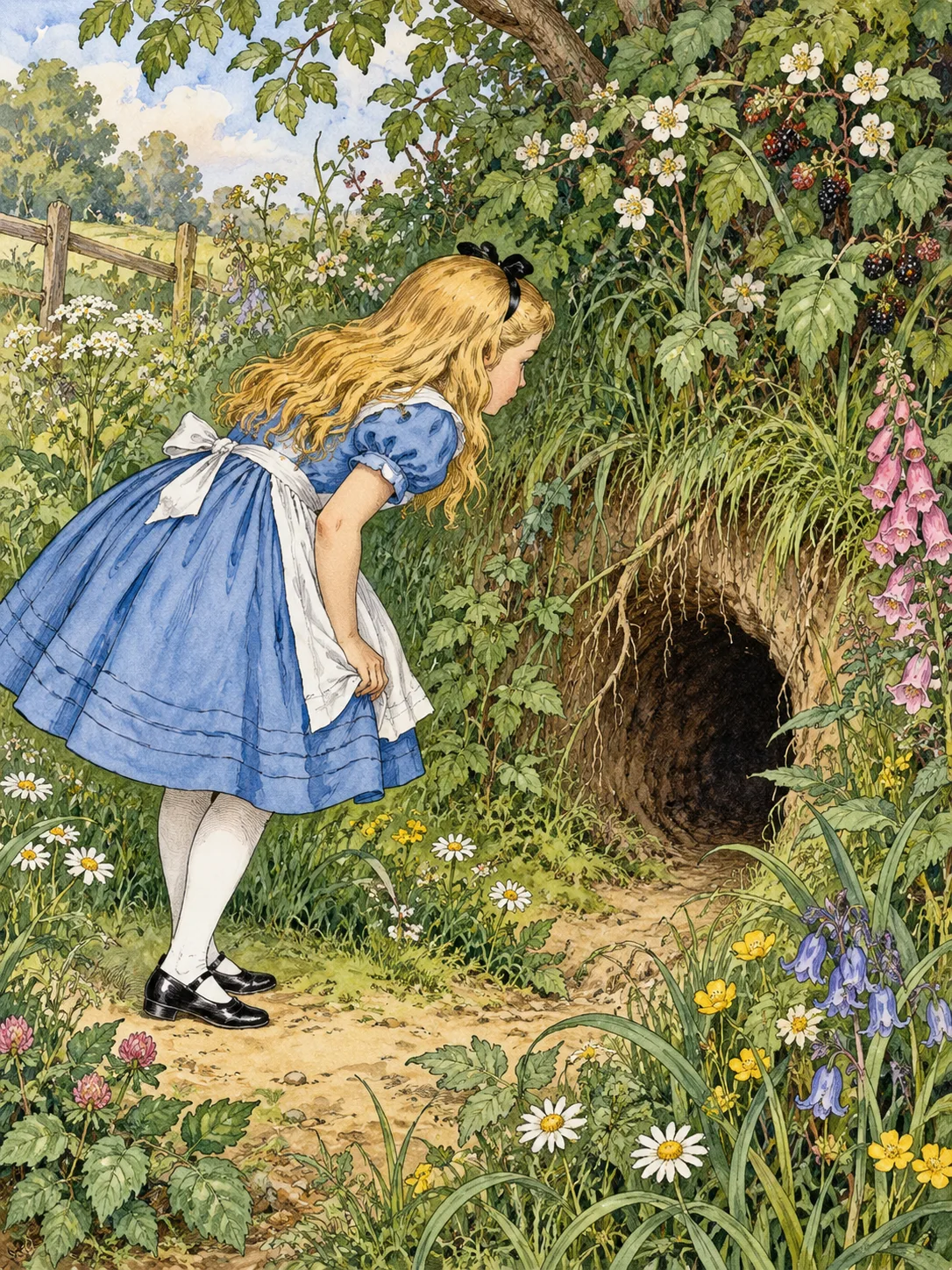
Alice's Adventures in Wonderland, written by Lewis Carroll in 1865, follows a young girl named Alice as she tumbles down a rabbit hole into a fantastical realm where logic is turned upside down and absurdity reigns. Its distinctive blend of whimsy and wordplay has captivated readers for generations.
The book at a glance
| Title | Alice's Adventures in Wonderland |
|---|---|
| Author | Lewis Carroll |
| First published | 1865 |
| Original language | English |
| Genre | Fantasy |
| Setting | Wonderland |
| Main characters | Alice, the White Rabbit, the Cheshire Cat, the Queen of Hearts |
| Estimated English level | A2–B1 — an editorial estimate, not an official rating |
Spoiler-free summary
In Alice's Adventures in Wonderland, Alice is a curious young girl who falls down a rabbit hole into a fantastical world filled with peculiar creatures and nonsensical events. As she navigates this strange land, she encounters characters like the White Rabbit, the Cheshire Cat, and the Queen of Hearts, each presenting their own unique challenges and absurdities. Throughout her journey, Alice grapples with questions of identity and logic, as she tries to make sense of the whimsical rules governing Wonderland.
Why it is worth reading
Alice's Adventures in Wonderland is worth reading for its playful language and clever wordplay that sparkles with wit and whimsy. Carroll's ability to blend fantasy with philosophical musings invites readers to reflect on the nature of reality and identity. The absurdity of Wonderland serves as a mirror to the complexities of growing up, making it a timeless tale that resonates with both children and adults.
The main characters
Alice is the inquisitive protagonist whose journey through Wonderland leads her to question her own identity and the world around her. The White Rabbit is the anxious guide who leads Alice into this strange realm, while the Cheshire Cat offers cryptic advice and a disconcerting grin. The Queen of Hearts embodies the chaotic authority of Wonderland, demanding obedience with her infamous decree of 'Off with their heads!'
Themes
Identity is a central theme in Alice's Adventures in Wonderland, as Alice struggles to understand who she is in a world where she constantly changes size and encounters contradictory characters. The theme of logic versus absurdity permeates the narrative, challenging readers to reconsider the rules of reality and reason. Additionally, the book explores the transition from childhood to adulthood, highlighting the confusion and unpredictability that often accompany growing up.
What it feels like to read
Reading Alice's Adventures in Wonderland feels like stepping into a dream—one filled with vivid imagery, playful dialogue, and a rhythmic prose style that dances between whimsy and seriousness. The narrative is rich with dialogue, often punctuated by nonsensical exchanges that enhance the surreal atmosphere. Carroll's inventive use of language may require some readers to pause and reflect, but it rewards them with delightful surprises and clever insights.
How hard the English is
The English in Alice's Adventures in Wonderland presents a unique challenge due to its playful use of language, puns, and nonsensical phrases. While some vocabulary may be accessible to A2 learners, the whimsical structure and idiomatic expressions can elevate the difficulty to a B1 level. Readers will encounter a mix of straightforward dialogue and complex ideas, making it essential to approach the text with patience and an open mind.
Who should read it, and who should start elsewhere
This book is ideal for readers who enjoy whimsical tales and appreciate clever wordplay. It's particularly suited for those who are curious about the absurdities of life and identity. However, readers seeking a straightforward narrative or fast-paced action might find the dreamlike quality of Alice's Adventures in Wonderland less engaging and should consider starting with a more traditional story.
Questions a reader might ask
What makes Alice's Adventures in Wonderland a classic? The book's innovative narrative style, memorable characters, and exploration of profound themes have cemented its status as a literary classic that continues to inspire adaptations and interpretations.
Is the story suitable for children? Yes, while the book contains nonsensical elements and absurd situations, it is often enjoyed by children for its imaginative storytelling and playful language.
What can I learn from Alice's journey? Alice's experiences highlight the importance of curiosity, resilience, and self-discovery, encouraging readers to embrace the unknown and question the world around them.